TU Dortmund
in Dortmund · official site · International Office
TU Dortmund is a public research university in Dortmund, North Rhine-Westphalia, founded in 1968, with 29,502 students (winter semester 2025/26) across around 90 Bachelor's and Master's programmes in 17 departments spanning natural sciences, engineering, social sciences and cultural studies. A member of the University Alliance Ruhr (with Ruhr University Bochum and the University of Duisburg-Essen), it has a strong research profile in statistics, computer science and engineering. International students make up 21.6% of enrolment (about 6,370 students from over 120 countries; roughly 43% at Master's level), and 19 Master's programmes or specialisations are taught entirely in English.
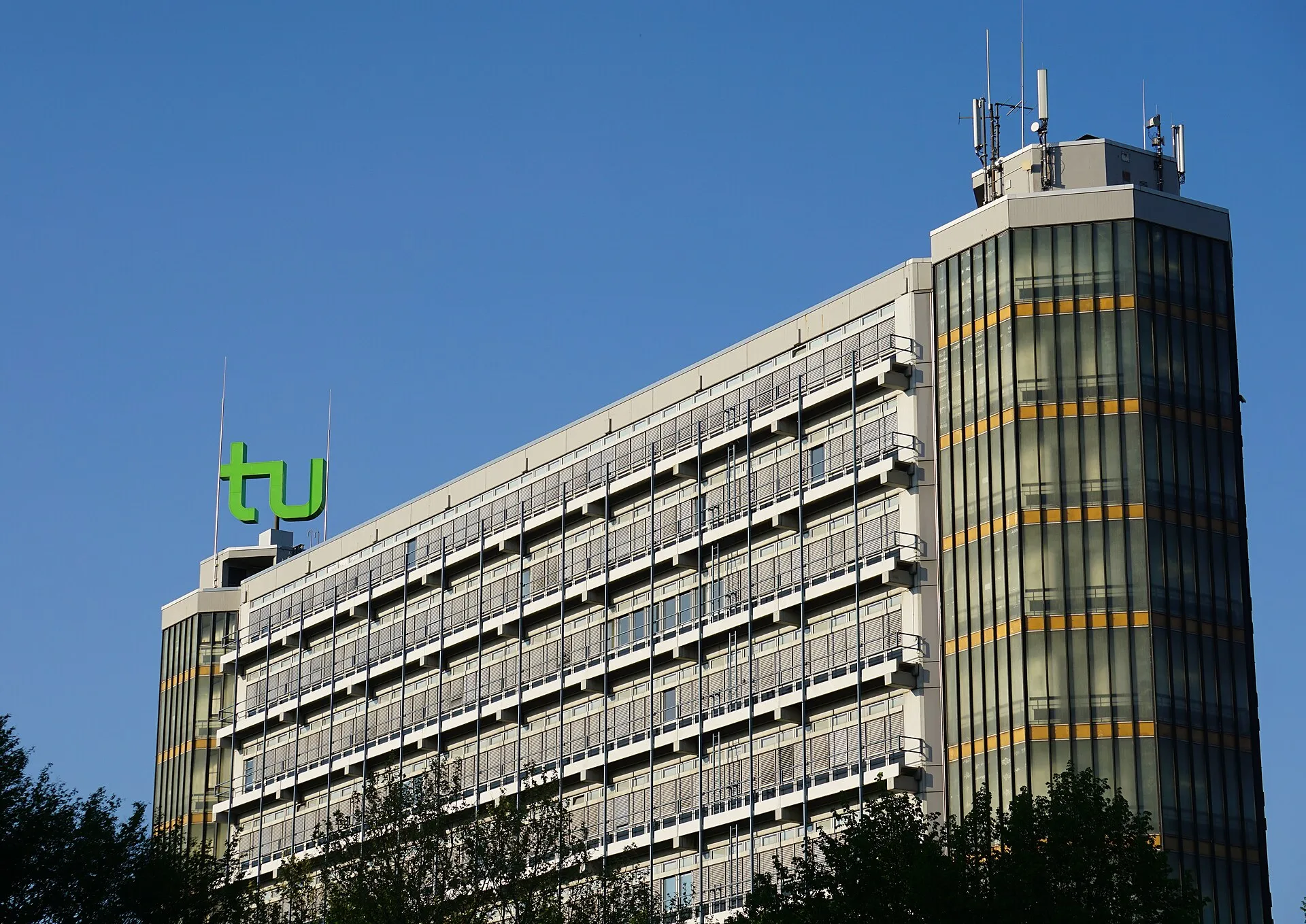
Photo: Maximilian Reininghaus, Wikimedia Commons (FAL 1.3)

Master's programmes here
- Applied Linguistics (M.A.)
- Applied Literary and Cultural Studies (M.A.)
- Architecture and Urban Design (M.Sc.)
- Automation and Robotics (M.Sc.)
- Biochemical Engineering (M.Sc.), Specialization Biopharmaceutical Engineering (M.Sc.)
- Business Administration and Economics (M.Sc.)
- Chemical Biology (M.Sc.) (M.Sc.)
- Chemical Engineering (M.Sc.), Specialization Process Systems Engineering (M.Sc.)
- Chemistry (M.Sc.) (M.Sc.)
- Civil Engineering (M.Sc.)
- Computer Science (Informatik) (M.Sc.)
- Cultural Analysis and Cultural Intermediation (M.A.)
- Data Science (M.Sc.)
- Data Science in Sports and Health (M.Sc.)
- Econometrics (M.Sc.)
- Economic Policy and Journalism (M.Sc.)
- Economics and Journalism (M.Sc.)
- Electrical Engineering and Information Technology (M.Sc.)
- Empirical Multilingualism Research (M.A.)
- Industrial Mathematics (Technomathematics specialization) (M.Sc.)
- International Master of Advanced Methods in Particle Physics (IMAPP) (M.Sc.)
- Logistics (M.Sc.)
- Manufacturing Technology (MMT) (M.Sc.)
- Mathematics (M.Sc.)
- Mechanical Engineering (M.Sc.)
- Mechanics of Sustainable Materials and Structures (M.Sc.)
- Medical Physics and Physics of Living Systems (M.Sc.)
- Physics (M.Sc.)
- Real Estate and Construction Management (M.Sc.)
- Religion, Ethics and Politics (M.A.)
- SPRING – Spatial Planning for Regions in Growing Economies (M.Sc.) (M.Sc.)
- Statistics (M.Sc.)
- Sustainable Energy Systems (M.Sc.) (M.Sc.)
Services for international students
Your first stop for almost everything is the International Office: admission letters, visa questions, enrolment, and orientation weeks all run through it.
Like every large German technical university, TU Dortmund also runs a career service, psychological counselling, a language centre and university sports.
A verified, per-service guide (what each office does, where it is, what to bring) is being researched and will be published section by section. We only ship what we've checked.
Scholarship directory
-
Karl-Schlotmann-Stiftung
A Dortmund foundation scholarship relevant to TU Dortmund students. Amounts, eligibility and deadlines are being verified with the foundation. Ask the International Office about it by name in the meantime.
-
Deutschlandstipendium
The national merit scholarship (€300/month, one year, renewable) offered through the university itself. Applications go via TU Dortmund, typically shortly after the winter semester starts.
-
DAAD scholarship database
The definitive searchable database for international-student funding in Germany: daad.de scholarship search.
Verified amounts and deadlines for university-specific scholarships are on the research list; unverified numbers don't get published here.
Campus systems you'll actually use (LSF · BOSS · ILIAS)
German universities split "one student portal" into several systems, and nobody tells internationals which is which. At TU Dortmund:
- LSF
- The course catalogue and timetable system: where you find lectures and build your semester schedule.
- BOSS
- Exam administration: registering for exams (mandatory, with deadlines!) and retrieving grades. Missing a BOSS exam registration is the classic first-semester mistake.
- ILIAS / Moodle
- Course materials and communication: slides, exercise sheets, announcements from lecturers.
Step-by-step walkthroughs with screenshots (and the common pitfalls for each system) are planned as a dedicated guide.